

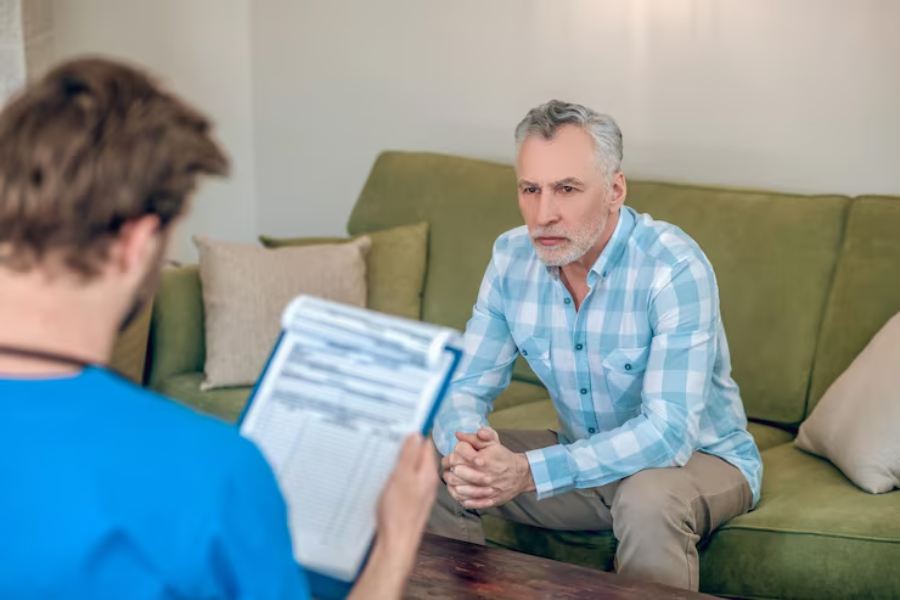
You visit your mom at the nursing home off Peachtree Street, bring sweet tea and a crossword, and notice a bruise on her arm. Staff says she “bumped into a table.” Maybe. But then you see another bruise the next week. And a new sore spot on her heel. Your stomach twists. Do you push back? Do you call someone? And if you do, how do you even begin?
Here’s the thing: nursing home abuse cases in Georgia can get complicated fast. Not because families don’t care—they do. It’s because these places are often part of big companies with layers on layers. Georgia nursing home abuse lawyers provide their services to assist at that stage of the process. The experts possess complete knowledge about the map and its critical areas which they will use to safeguard vital information from becoming lost in administrative records.
Why These Cases Get So Complicated in Georgia
On the surface, it can look simple. A fall in Savannah. A bedsore in Macon. A medication mix-up in Augusta. But wait—now, here’s where it gets tricky. The “nursing home” you see might be owned by one company, managed by a second, and staffed by a third. The doctor could be independent. The pharmacy could be a separate vendor. Insurance? Another layer.
Add in rules from the state and feds, deadlines for filing, and digital medical records that take a pro to read, and you can see how the average family gets overwhelmed. You’re juggling work, kids, and care visits while the facility hands you a folder of forms and “policy statements.”
A seasoned Georgia attorney knows how to cut through all that. They’ve dealt with places off Pio Nono Avenue in Macon and down by Abercorn Street in Savannah. They’ve seen short staffing, “lost” incident reports, and those surprise arbitration agreements tucked inside admission papers. They know which threads to pull—and how hard.
What a Georgia Nursing Home Abuse Lawyer Actually Does
If you’re thinking, “So what do they do that I can’t?” Fair question. The short answer: a lot. And it matters.
Tracking Down the Real Story in the Records
Most homes keep care plans, nurse notes, wound charts, and call-light logs. Sounds boring. But those details tell a story. Did staff turn a resident every two hours like they promised? Did someone answer the call button when your dad needed the bathroom? Did anyone write down the fall risk?
A lawyer pushes for the full records, not just the glossy summary. Their request for electronic audit trail requires them to obtain all background data which displays chart access times and user information. The timing of events creates an unexpected but accurate reflection of what actually happened. A note typed at 2 a.m. about a 9 p.m. fall? Hmmm. The specific details of this nature will transform the entire case investigation.
Following the Corporate Money Trail
Many Georgia facilities have a “family” of companies: a landlord, a management group, a staffing group, and a brand name on the sign out front. Why split it up? To protect money and spread responsibility. An attorney maps it all out—who hired whom, who set the staffing levels, who made the policies. When the case gets serious, you want the right players at the table, not just a shell company with no funds.
Handling Arbitration, Deadlines, and Court Rules
Now, here’s a headache most folks don’t see coming: admission papers often include an arbitration clause. It’s a form that tries to force families to handle claims outside of court. Can it be challenged? Sometimes, yes. A Georgia lawyer knows when and how to fight it. And if the case must go to arbitration, they know how to make it fair and keep the process moving.
They also track strict deadlines. Georgia gives you a short window to file most injury claims. Waiting “to see what happens” can cost you your rights. A lawyer won’t let the clock run out while you’re chasing phone calls.
Getting Experts Who Speak Plain English
To prove neglect, you usually need expert voices—nurses, wound-care specialists, geriatric doctors. The best lawyers find pros who don’t talk in riddles. They explain how a pressure sore should’ve been prevented, why a fall was predictable, or how dehydration led to a hospital trip at Grady or St. Joseph’s. Clear, simple, powerful.
Lesser-Known Details That Can Make or Break Your Case
Here’s a small list that’s bigger than it looks.
- Admission packets often include arbitration forms. Don’t assume you’re stuck with them. Sometimes they’re not enforceable.
- Many homes use digital records with an audit trail. The audit trail can show late entries or changed notes. It’s not always handed over unless you ask the right way.
- Staffing numbers matter. Payroll-based staff data can show whether the home cut corners on care aides Sunday nights or during holidays.
- Photos, taken early, help a ton. A quick snapshot on your phone of a sore or bruise—dated and saved—tells a clear story weeks later.
- The Georgia Long-Term Care Ombudsman can help you file a complaint. Adult Protective Services can take reports, too. Your lawyer can line these up so nothing gets missed.
Why Families Can’t (and Shouldn’t) Do This Alone
Could you request records yourself? Sure. Could you call the state? Absolutely. But when a facility feels the heat, they call their lawyers and their insurance folks. They don’t play casual. If you’re going up against a team, you should have a team.
Think of it like Friday traffic on I-285. You can drive it alone. But if you’ve never dealt with the lanes, the exits, the tangled ramps, you’ll miss your turn. A Georgia nursing home abuse lawyer is your GPS, your lane-change assist, and the person reminding you not to take that weird exit by Ponce de Leon that dumps you into nowhere.
From First Call to Finish: What the Process Can Look Like
No two cases are the same, but there’s a rhythm.
First, a lawyer listens. They look at your notes and photos. If something smells off, they send a letter to preserve evidence—charts, video, even call-light data. That stops “accidental” deletions.
Next comes the record dive. They request the full chart and the audit trail. They bring in experts who can read skin assessments, fall plans, and medication lists without getting lost in jargon.
Then come sworn interviews. Staff answer questions under oath. It’s not a movie scene, but it can get tense. Little cracks appear—missed turns, late care, alarms that weren’t plugged in.
Finally, the case moves toward settlement or trial. Many settle once the proof is clear. Some go the distance. A strong Georgia lawyer knows how to tell a simple, honest story to a jury in Fulton or Chatham County: what should’ve happened, what didn’t, and how it hurt your family.
A Few Georgia-Specific Touches That Matter
Judges and juries here are people like your neighbors in Decatur, Valdosta, and Athens. They get church potlucks, Friday night football, and stopping at Waffle House after a long day. They also understand respect for elders. When a case shows that a home cut corners—skipped turns, rushed baths, ignored call lights—that hits hard.
And yes, Georgia law allows for extra penalties when the conduct is especially bad. Your lawyer will know when to push that button and when to keep it simple.
Final Words
Protect your loved one in Georgia nursing homes. Document everything: take photos, request care plans, and trust your instincts. People should avoid handling their current issues without any form of assistance. The local abuse attorney uses their legal power to make businesses face consequences for their actions. Your watchfulness needs to begin with a single action which will lead to both justice and dignity.