

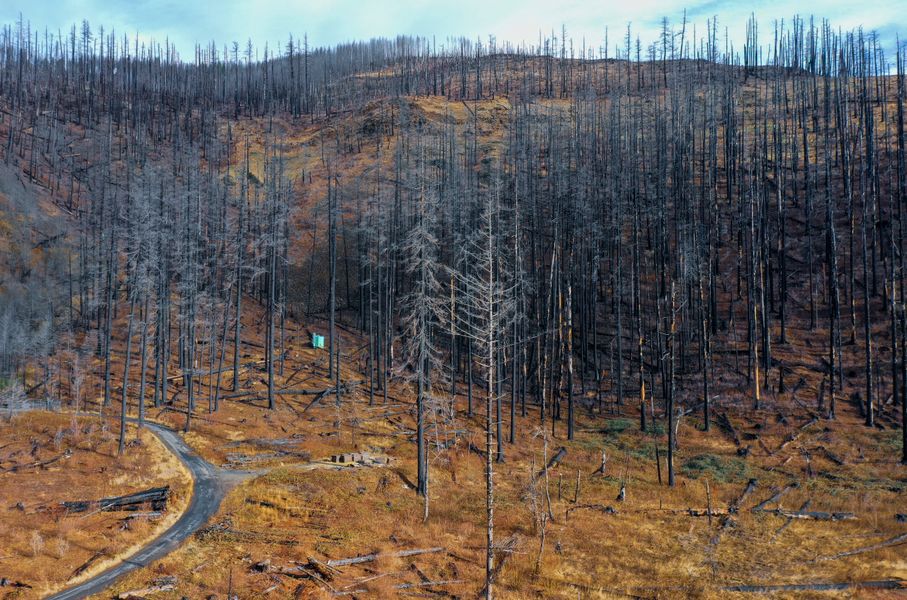
Wildfire property claims can appear straightforward from a distance. A home burns, a commercial building is damaged, landscaping is destroyed, and the owner seeks compensation for the loss. In practice, however, placing a defensible value on wildfire damage can become one of the most complex parts of the litigation because the financial consequences often extend well beyond the visible destruction. A severe wildfire can affect the land itself, surrounding vegetation, utilities, access, future insurability, rebuilding costs, business operations, and even the long-term marketability of the property. Two neighboring owners can therefore suffer very different economic consequences from the same fire, even if the physical damage initially appears similar.
The challenge is that valuation is not always a matter of identifying what was destroyed and attaching a replacement price to it. In many cases, the more difficult question is how to calculate the economic position the owner would likely have occupied had the wildfire never occurred. That may require consideration of reconstruction costs, market value, lost use, diminished value, code upgrades, business interruption, and future expenses that only become apparent months after the event.
Replacement Cost and Market Value Can Tell Different Stories
One of the first complications is that several different measures of value may be relevant, and they do not always produce the same result. A property may have had a pre-fire market value of one amount but require significantly more money to rebuild. Construction costs can rise sharply after a major disaster because demand for labor and materials increases at exactly the same time. Local contractors may become booked months in advance, specialist trades may be scarce, and the cost of transporting materials can increase as rebuilding activity intensifies across an affected region.
Older properties create further difficulties because replacing what existed may not be practical or even legally permissible. A house built several decades ago may contain materials, layouts, or construction methods that are expensive to reproduce, while rebuilding can trigger current building codes that did not apply when the original structure was constructed. The replacement cost may therefore exceed the property’s former sale value by a significant margin. The reverse can also occur. A home may have commanded a premium because of its location, mature trees, privacy, views, or established landscaping, meaning that reconstructing the physical building alone does not necessarily restore the owner to the same economic position.
The Land Itself May Have Suffered a Lasting Loss
Wildfire damage to land is sometimes underestimated because the parcel remains physically present after the fire. Yet severe fire can fundamentally alter what gave that land its value. Mature vegetation may be destroyed, slopes may become unstable, drainage patterns can change, and erosion risk may increase. Fences, irrigation systems, access roads, retaining structures, outbuildings, and other improvements may be lost at the same time.
There may also be a longer-term effect on the desirability of the property. A home that once felt secluded may suddenly be exposed after the loss of trees and vegetation. Buyers may become more cautious about purchasing in an area associated with a major wildfire, particularly if there are continuing concerns about future fire risk, mudslides, flooding, infrastructure damage, or the availability and cost of insurance. Valuing these effects can require more than a conventional construction estimate. Real estate appraisers, engineers, contractors, arborists, environmental specialists, and economists may all become relevant depending on the nature of the property and the loss.
The Claim Often Extends Beyond the Building
A wildfire property case may involve numerous categories of damage, some obvious and others much less so. The central issue is not merely whether a particular item was damaged, but whether the claimed amount can be supported by reliable evidence and an appropriate valuation method. Depending on the circumstances, the losses may include:
- the pre-fire fair market value of the property;
- the reasonable cost of repair or reconstruction;
- demolition and debris-removal expenses;
- code upgrades and permit-related costs;
- damage to landscaping, trees, fences, driveways, and outbuildings;
- temporary housing or loss-of-use costs;
- lost rental income or interruption to business activity;
- remediation of smoke, ash, or environmental contamination; and
- any measurable reduction in property value after repairs are completed.
Receipts, contractor estimates, photographs, appraisals, tax records, architectural plans, prior real estate listings, insurance documents, and expert reports can all contribute to the final valuation. What matters is not simply the existence of a loss but the ability to show how the figure was calculated and why that calculation is reasonable.
Diminution in Value Can Be Especially Difficult to Prove
One of the more contentious questions is whether a repaired or rebuilt property remains worth less than it was before the wildfire. This is sometimes described as residual diminution in value. Even after reconstruction, a buyer may view the property differently because of its history, changes to the surrounding area, the destruction of mature vegetation, increased perceived fire risk, or greater difficulty obtaining insurance.
Proving that reduction is rarely simple. A claimant may reasonably believe that the property has lost value because prospective buyers are more hesitant, but litigation generally requires more than personal perception. Comparable sales, market trends, expert appraisal methodology, changes in local demand, and evidence of buyer behavior may all become relevant. Defendants, meanwhile, may argue that the property has been fully restored and that any claimed stigma or loss in value is speculative.
For wildfire litigation attorneys, this can become one of the areas where legal strategy and valuation evidence need to work particularly closely together. A strong claim generally does not rely on a single headline number. It explains how the loss has been calculated, why the methodology is appropriate, and how the claimed amount relates to actual market conditions or rebuilding realities.
Code Requirements Can Change the Economics of Rebuilding
A major wildfire can also expose a considerable difference between restoring what existed and constructing what current law requires. A replacement structure may have to comply with updated fire-resistance standards, energy-efficiency rules, electrical codes, accessibility provisions, seismic requirements, or local planning conditions. The owner may also face expenses that were never part of the original property, including upgraded drainage, new retaining systems, revised setbacks, or infrastructure work that must be completed before rebuilding can proceed.
These additional obligations can materially increase the cost of restoration and may only become clear once architects, engineers, contractors, and local authorities are involved. That is one reason early estimates can prove inadequate. A contractor may initially price the visible structural loss, but later discover that permits, engineering requirements, code compliance, or site preparation make the final rebuilding cost substantially higher. Where litigation is involved, the question then becomes which of those added expenses are legally recoverable and how convincingly they can be linked to the wildfire.
Commercial Property Creates Another Layer of Complexity
When the damaged property is used for business, valuation can become more difficult still because the physical structure may represent only one part of the economic loss. A business may lose inventory, machinery, customer access, operating capacity, or the ability to serve a particular market. Even a temporary closure can have consequences that continue after the business reopens, especially if customers move to competitors, employees leave, supply agreements are disrupted, or seasonal income is lost at a time when it cannot realistically be recovered later.
Calculating those losses may require accountants or economists to distinguish between revenue that disappeared because of the wildfire and losses that would have occurred for other reasons. That distinction can become highly contested where the business was already growing, declining, restructuring, or facing unusual market conditions before the event. A claim for lost profits, for example, may need to be supported by historical financial records, forecasts, comparable trading periods, customer data, and evidence showing that the wildfire rather than broader economic conditions caused the interruption.
Insurance Payments Do Not Always Resolve the Full Loss
Many wildfire victims receive compensation through their own property insurance, but that does not necessarily answer every valuation question. Policies may contain limits, deductibles, exclusions, depreciation rules, or specific methods for calculating replacement cost, and some categories of loss may not be fully covered at all. Where another party is alleged to have caused the wildfire, the relationship between insurance recovery and a third-party claim can therefore become legally significant.
The underlying concern is usually to prevent double recovery while still recognizing genuine losses that were not fully compensated through insurance. That can require detailed analysis of policy payments, outstanding expenses, subrogation interests, deductibles, uncovered losses, and the exact heads of damage being pursued against a defendant. In a complex case, insurance documentation can become just as important to the valuation exercise as construction estimates or property appraisals.
Documentation Becomes More Important as the Case Ages
Wildfire litigation can continue long after the physical cleanup has been completed, and that passage of time can make valuation more difficult. By the time a claim reaches an advanced stage, original conditions may no longer be visible, rebuilding may already be underway, contractors may have revised their estimates several times, and memories of what existed before the fire may have faded.
Contemporaneous documentation can therefore become extremely valuable. Pre-fire photographs may show the condition of the property, landscaping, views, or improvements. Architectural drawings can establish the scale and quality of structures that no longer exist. Prior appraisals, refinancing documents, tax records, insurance schedules, and real estate listings can provide additional evidence of value. Post-fire photographs, drone footage, satellite imagery, engineering reports, and cleanup invoices may help demonstrate the extent of the destruction and the cost of recovery.
A credible valuation is often built from many pieces of evidence rather than from one expert opinion prepared late in the litigation. The more clearly those pieces support one another, the easier it becomes to explain not only what was lost, but why the claimed value is justified.
A Property Loss Is Rarely Just a Repair Bill
The complexity of wildfire valuation comes from the need to identify the true economic consequences of the event rather than simply the most visible damage. For one owner, reconstruction cost may be the dominant issue. For another, the greater loss may be diminished land value, destroyed landscaping, or an inability to use the property for an extended period. A commercial owner may face significant business interruption, while a landlord may experience prolonged rental losses.
That means the appropriate valuation method can vary considerably from one claimant to another, even within the same wildfire. Major wildfire litigation may involve thousands of affected properties, but the economic consequences remain highly individual. Location, building type, land characteristics, insurance coverage, rebuilding requirements, and the way the property was used can all influence the final calculation.
Careful valuation therefore matters because the objective is not simply to produce the largest possible number. It is to establish a figure that reflects the real economic impact of the loss and can withstand scrutiny from insurers, defendants, experts, and, if necessary, a court.